Why Your Toilet Keeps Running
Typically, a toilet keeps running because of one of three faults: an inlet valve that won't close, a flush valve whose seal leaks, or a water level set past the overflow. Each fault sounds different, so a minute of listening narrows things down before any tools come out. A licensed plumber handles the repair, and the parts are ordinary stock.
If we're late, $100 comes off your bill

- Licensed and InsuredEvery job done by a licensed plumber. QBCC No: 15024607
- Fixed Quote FirstFlat-rate pricing, agreed before any work starts
- Lifetime Labour WarrantyBacked by our Fix-It-or-It's-Free guarantee (T&Cs apply)
- $0 Call-Out FeesNo extra charge for nights, weekends or public holidays
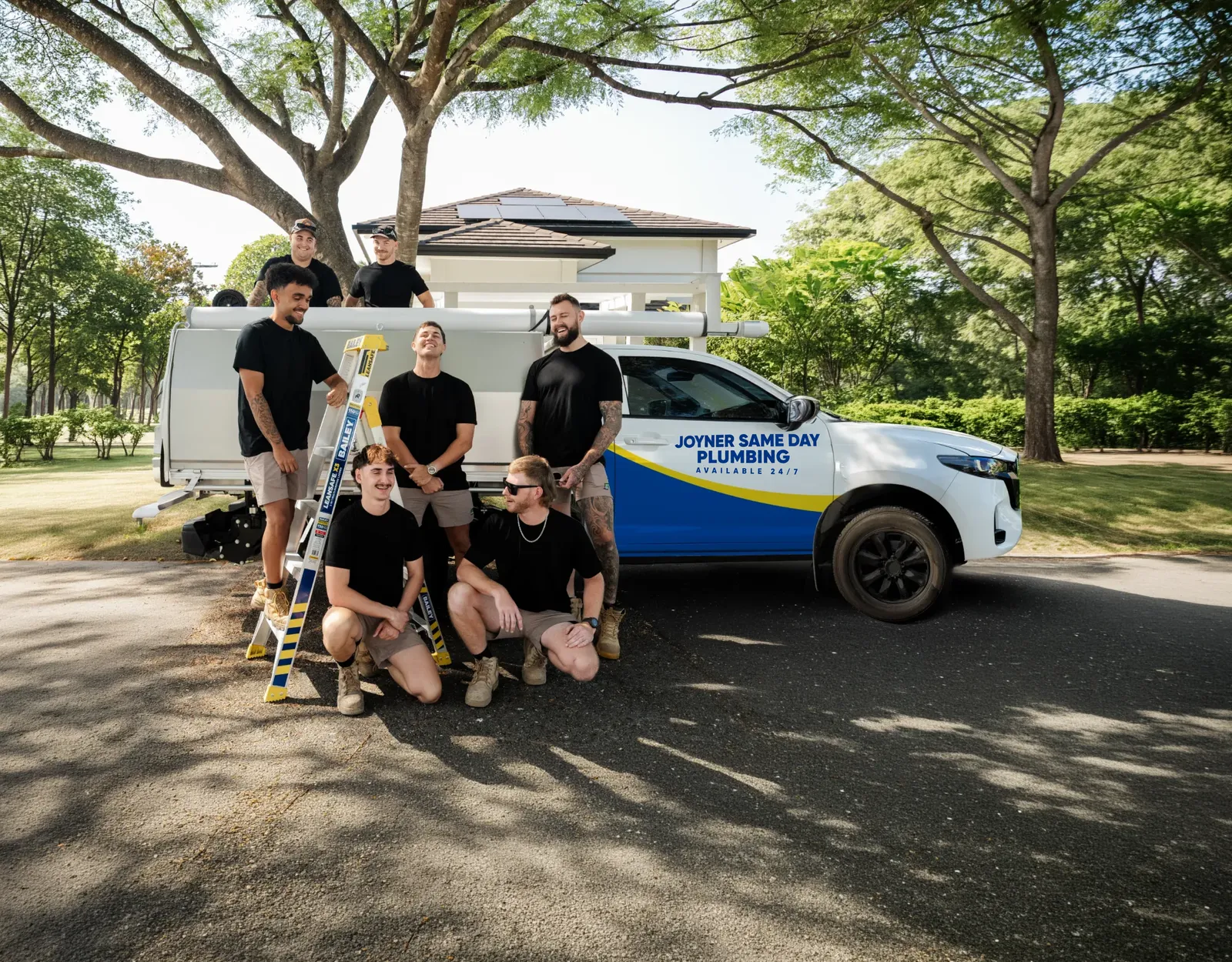
Cisterns here split by age. The places off Rolls Royce Court have flushed the same hardware since the 1990s, so worn rubbers and tired valves are the norm there. The young builds near Jarvis Court run the other way: a running loo there is usually a part adjusted badly on install day, not wear.
Here is what each fault sounds like, a colour test you can run tonight, what Queensland law lets you swap yourself, and who pays for the wasted water. Our Joyner plumbers meet both kinds every week.
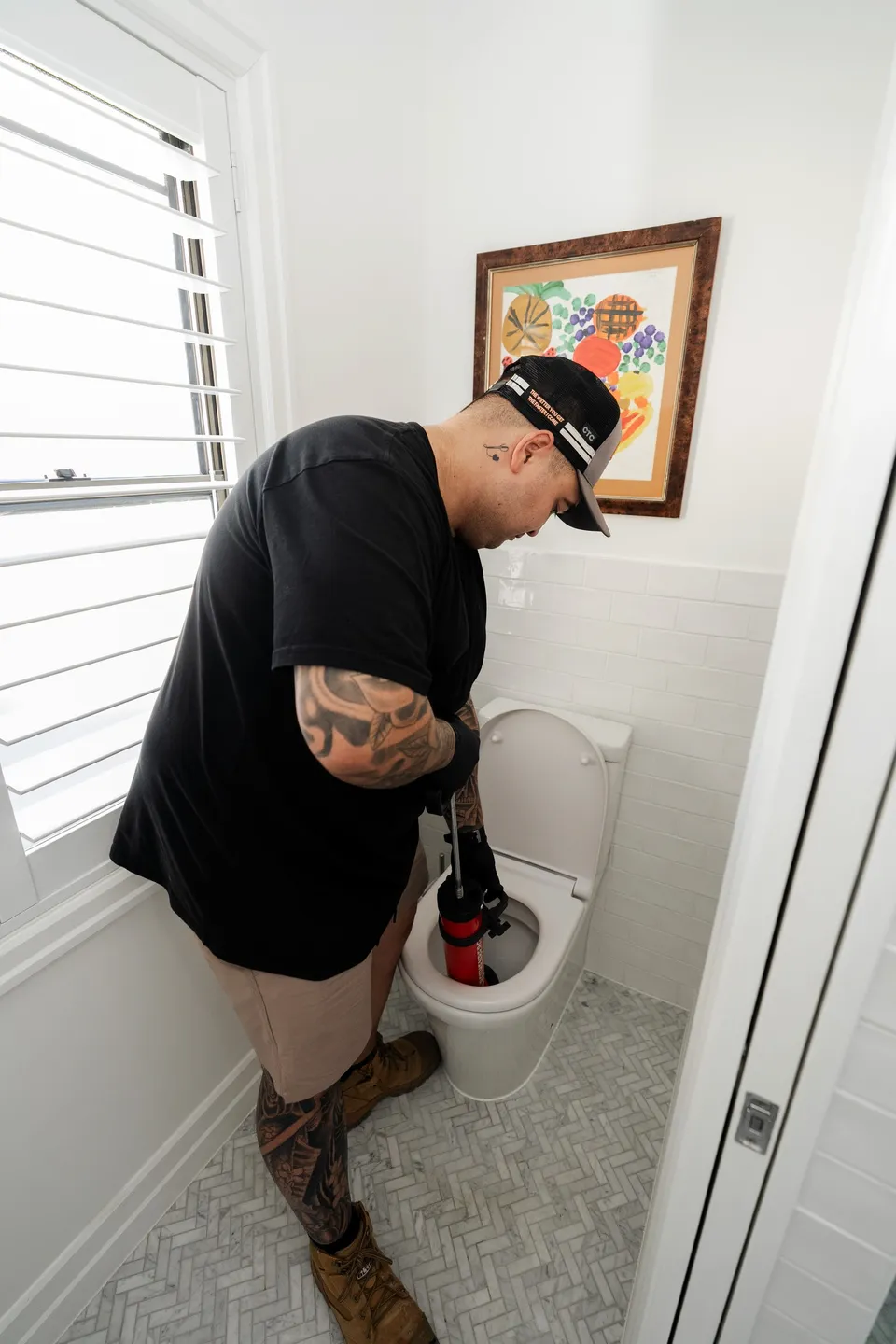
Inlet Valve, Flush Valve Seal and Overflow Explained
Three parts cause nearly every running cistern: the inlet valve, the flush valve's rubber seal, and the overflow.
The inlet valve
After a flush, the inlet valve fills the cistern again and stops once the float reaches its mark. Worn or clogged, it fills slowly, hisses, or keeps letting water in.
The flush valve
The flush valve holds the water between flushes. When its rubber seal perishes, water slips into the pan, the inlet valve keeps replacing it, and the loo sounds like it never finishes flushing.
The overflow
The overflow is a spill point that sends surplus water into the pan instead of across your floor. A valve that won't close or a float set high sends water that way, sometimes as a drip from the pipe outside.
Each fault leaves a clue:
- A hiss carrying on after the cistern has filled: the inlet valve.
- The cistern quietly refilling between flushes, or a trickle down the bowl's back wall: the rubber seal.
- Water escaping via the overflow, including a drip outside: the level is past its mark, so the valve or float needs attention.
The Dye Test for a Leaking Cistern
Squeeze a few drops of food colouring into your cistern, wait without flushing, then look at the bowl: colour there means the cistern is leaking into the pan.
Flush afterwards to clear the colour. Food colouring leaves no mark on ceramic, so nothing needs scrubbing.
A clear bowl means the outlet side is holding, and the inlet valve plus the water level are your next checks.
No colouring in the house? Press a sheet of dry toilet paper against the bowl's rear wall, above the waterline. The paper should stay dry; damp paper means a trickle is running down from the cistern.

Slow, Partial or No Refill After a Flush
A cistern that barely fills usually means an inlet valve that's worn or blocked, a float adjusted too low, or a stop tap not fully open. Check the stop tap first, because a quarter-turn costs nothing.
If water keeps flowing yet the level never rises, the seal on the outlet side may be releasing water as quickly as it enters. The cistern can never hold its level while that goes on.
Both patterns turn up on our runs. On the older blocks off Fairlane Street, age explains it; in the young townhouse streets, a valve set up wrong on install day is the likelier story.
The QBCC List of Unregulated Cistern Work
The QBCC lists three cistern parts as do-it-yourself work for anyone with the needed know-how: a float valve washer, a drop valve washer or a suction cup rubber. The result must still meet the standards the legislation and codes set.
Any other toilet repair counts as minor work: a QBCC licensee carries it out, and neither a permit nor a Form 4 applies. Inlet valves, flush valve assemblies, buttons and cistern swaps all sit on the licensed side.
In a Queensland rental, the owner or manager must keep the place in good repair. The tenant's job is reporting faults promptly. The emergency list covers a toilet that's blocked or broken, not one that runs on, so this repair is routine and the owner has a reasonable window to arrange it.
Does the Water Utility Cover a Running Toilet
No, Unitywater's concealed leak adjustment excludes water lost through a leaking cistern. The adjustment applies to hidden pipe leaks only; cisterns share the exclusion list with taps, hot water units and other appliances.
Responsibility for leaks on the property side, and for the water they waste, sits with the owner. A cistern that runs on adds to the Unitywater bill until it's fixed, and nothing flows back the other way.

When to Call a Plumber for a Running Toilet
Ring us when the bowl shows colour after the test, when the cistern won't hold its level, or when the noise has outlasted a weekend. Left alone, a running loo pours water you pay for down the drain, and the worn part only gets worse.
Our toilet repairs service covers inlet valves, seals, floats and full cistern rebuilds, all under QBCC No: 15024607.
Joyner Questions About Running Toilets
Call (07) 3523 7172Why does my toilet keep running after I flush?
Two faults cover most cases: an inlet valve that won't close, or a worn seal letting water into the pan so the cistern keeps refilling. The third is a level set past the overflow. A hiss points to the valve; a cistern refilling by itself points to the seal.
Will food colouring stain my toilet bowl?
No, food colouring leaves no mark on a ceramic bowl. One flush afterwards clears it.
Can I fix a running toilet myself in Joyner?
Yes, for three parts only: a float valve washer, a drop valve washer or a suction cup rubber, which the QBCC lists as unregulated work. The result must still meet the standards. Anything beyond those parts needs a licensed plumber.
Which toilet cistern parts can a home owner replace?
The QBCC's list names a float valve washer, a drop valve washer or a suction cup rubber as parts you may swap yourself. The work must still meet the standards, and a leaking cistern is one thing Unitywater won't adjust on your bill.

Ring Us About the Running LooWe'll call you back.
Book on (07) 3523 7172 for plumbing anywhere in Joyner. We're available 24/7, there's no extra charge for nights, weekends or public holidays, and every job comes with $0 call-out fees.
To claim your $0 call-out fee, call (07) 3523 7172 today.